How to post about license-plate cameras when residents have questions
Flock and other automated license-plate readers have become one of the most contested things a local government can put on a pole. When residents start asking who sees the data and how long it’s kept, silence reads as something to hide — and a defensive post reads worse. Here is how local governments are handling the conversation, whether they’re keeping the cameras, reversing course, or just trying to answer the questions honestly.
First: this is a trust question, not a technology announcement
The instinct is to post about license-plate cameras the way you’d post about a new piece of equipment — here’s the tool, here’s what it does for public safety. That framing is exactly what draws the pushback, because the resident concern isn’t “does it work,” it’s “who is watching me and what happens to that record.” The high-engagement posts start from the concern, not the capability. One of the most-shared examples in our data opened by acknowledging “some questions — and honestly, some misunderstandings” and then walked through the facts. Naming the worry out loud is what earns the read.
The postures local governments are taking — and how they frame each
- Keeping and defending them. Governments standing by the program do best when they show specific outcomes (a recovered vehicle, a located missing person) and pair it with the privacy guardrails — not one without the other. “Here’s a success” alone reads as selling; “here’s a success, and here’s who can and can’t see the data” reads as accountable.
- Answering the concerns directly. The transparency post — what the cameras capture, who has access, retention period, whether the data is shared with outside agencies — is consistently among the most-forwarded. On a topic this charged, being the plain-language source for the facts is worth more than any single announcement.
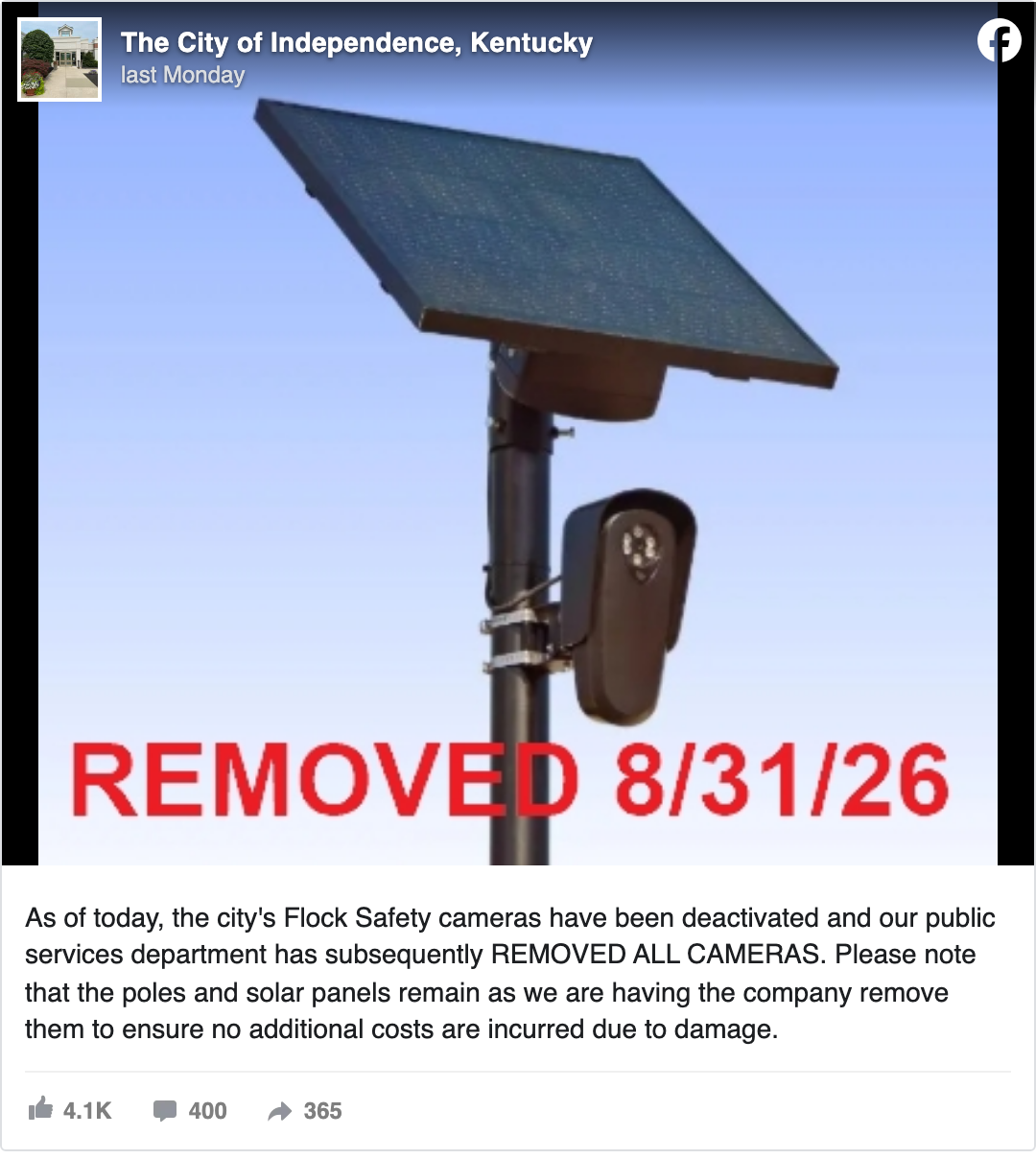
- Pausing or removing them. Governments that reversed course communicated it well by stating the decision plainly (“as of today, the cameras have been deactivated”), acknowledging the resident input that drove it, and saying what happens to the data already collected. A reversal handled openly builds more trust than a program defended grudgingly.
What makes these posts work
- Answer the three questions everyone asks: what does it capture, who can access it, and how long is it kept. If you answer nothing else, answer these.
- Say what it does NOT do. Much of the fear is about capabilities the system doesn’t have (facial recognition, live tracking of individuals). Correcting that directly defuses more anger than any success story.
- Name the data-sharing. Whether the footage is shared with state or federal agencies is the question behind the question. Address it before someone else frames it for you.
- Link to the policy. The actual retention and access policy, the vendor’s terms, the council vote. Forwarded posts reach people who want the primary source.
- Acknowledge the concern as legitimate. “We’ve heard the questions” costs nothing and changes the tone of the entire thread.
A checklist you can paste into a draft
- Open by naming the concern (“we’ve heard your questions about the cameras”).
- What the system captures — and, explicitly, what it does not.
- Who can access the data, and whether it’s shared outside your agency.
- How long footage is retained.
- The decision and the reasoning (kept, expanded, paused, removed).
- A link to the actual access/retention policy or the council vote.
Want to see exactly how other communities worded it — the FAQs that calmed the thread and the announcements that lit it up? GovFeeds lets you search real local-government posts on license-plate cameras and any other topic, filter to local governments your size and state, and see what earned engagement. Get a free benchmark for your community or take the 2-minute tour.