How to post about a data center in your community
A data center proposal is one of the few land-use questions that will fill your comment section whether you announce it or not. Residents are already talking about power bills, water, noise, and traffic. The only choice you control is whether your page is the calm, factual source in that conversation — or a bystander to it. Here is how local governments are handling it, and what the engagement data says actually lands.
First: this is a share-driven topic, so post like it
Most local-government content lives on likes. Data centers live on shares — residents forwarding your post into neighborhood groups and to the council members they’re about to email. In our data the median data-center post earned 12 engagements, but the standout is the share rate: 61% get forwarded at least once. Practically, that means two things. Your post will be read by people who don’t follow you, out of context — so it has to stand on its own. And a vague or defensive post gets forwarded with an angry caption attached; a specific, factual one gets forwarded as “here’s what’s actually happening.”
The three postures local governments are taking — and how they frame each
Whatever stage you’re at, another local government has already communicated it. The high-engagement posts cluster into three postures:
- Deciding / pausing. Governments announcing a moratorium or a permit decision lead the topic’s engagement. The pattern that works: state the action in the first line (“the Commissioners have adopted a moratorium on new data centers”), then why, then what happens next and where to read the full record. A clear decision with reasoning outperforms a procedural notice by a wide margin.
- Welcoming / approving. Governments announcing an approved project frame it as economic development — jobs, tax base, the specific location — and, in the strongest versions, get ahead of the concerns rather than omitting them. Announcing the upside without acknowledging water and power reads as a press release and draws the pushback into your comments anyway.
- Explaining / hosting the conversation. Some of the most valuable posts don’t announce a decision at all — they answer the recurring question directly (“What is the significance of the data centers and how much water are they using?”) and point to a recording or FAQ. On a topic this forwarded, being the source of the explainer is worth more than being first with the news.
What makes these posts work
Across postures, the high-engagement data-center posts share the same handful of moves:
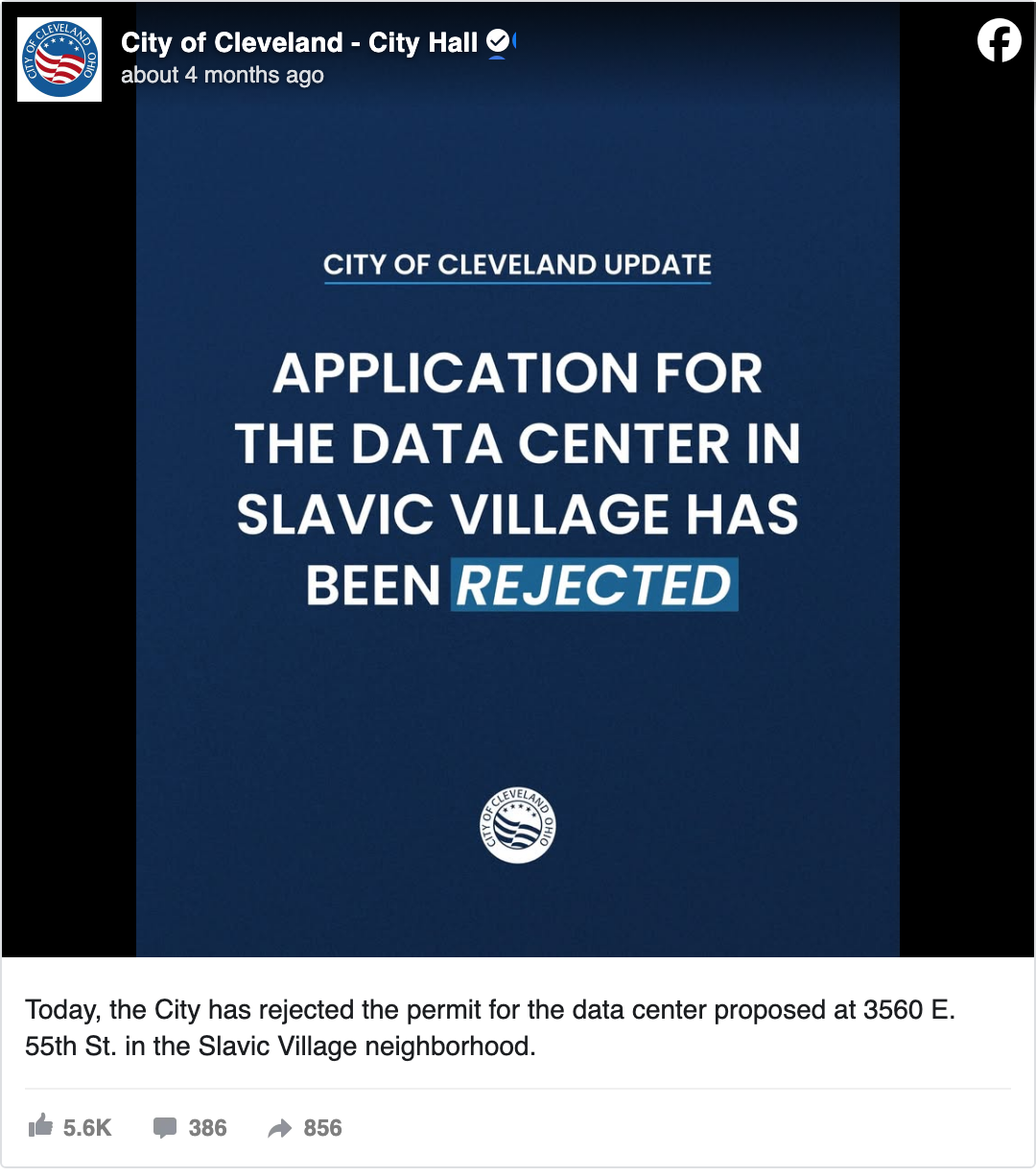
- Name the specific site. An address or intersection (“the data center proposed at 3560 E. 55th St.”) tells residents whether this is their backyard and stops the rumor version from filling the gap.
- State the stage plainly. Proposed, under review, approved, denied, paused — residents can’t tell these apart unless you say which one, and conflating them is where trust erodes.
- Answer water and power up front. These are the first two questions in every thread. A post that addresses them — even to say “here is what we know and don’t yet” — keeps the conversation on your facts.
- Link to the record. The agenda item, the staff report, the meeting recording. Forwarded posts reach people who want the primary source; give it to them so they don’t reconstruct it wrong.
- Say what’s next and when. The next hearing date and how to comment turns a viral post into turnout instead of just noise.
A checklist you can paste into a draft
- First line = the decision or stage, in plain words.
- The specific location.
- Water and power: what you know, what you don’t yet.
- The reasoning behind the decision (or the criteria under review).
- A link to the agenda item / staff report / recording.
- What’s next: the date, and how residents can weigh in.
Want to see how communities near you have handled it? GovFeeds lets you search real local-government posts on data centers and any other topic, filter by size and state, and see what earned engagement — so you’re borrowing framing that already worked instead of drafting from a blank page. Get a free benchmark for your community or take the 2-minute tour.